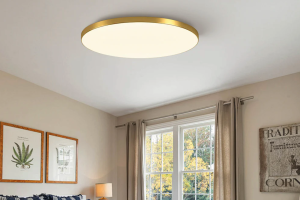
Looking to upgrade your living space with a touch of modern convenience? Smart ceiling lights with built-in Bluetooth speakers offer a seamless way to combine illumination and audio. Essentially, these devices integrate the functionality of a light fixture with a speaker that connects wirelessly to your phone or other Bluetooth-enabled devices. This means you can control your lighting and stream music or podcasts from a single unit, often simplifying your home setup and reducing clutter.
What Are They, Exactly?
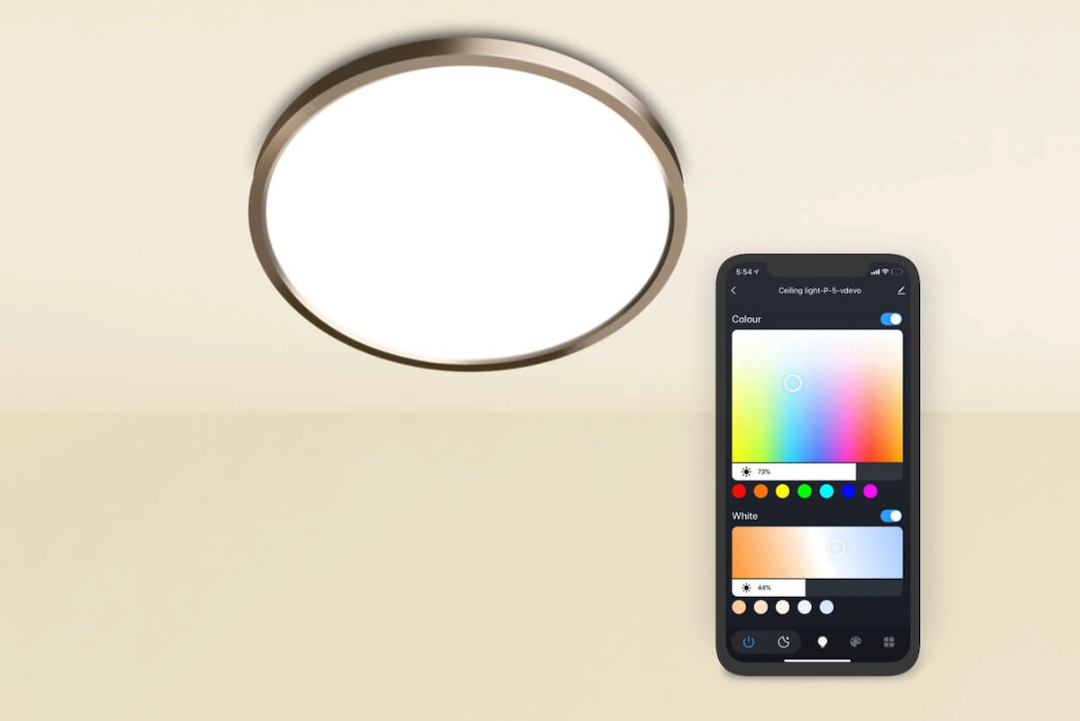
These aren’t just a regular light Annasonic bulb crammed next to a cheap speaker. We’re talking about integrated units designed to be installed as a ceiling fixture, much like a traditional overhead light. The “smart” aspect usually refers to features like app control, dimming capabilities, color temperature adjustments (from warm white to cool daylight), and sometimes even full RGB color options. The Bluetooth speaker part is what it sounds like – a speaker that pairs with your device for audio playback.
Why Consider One for Your Home?
The appeal here is primarily convenience and minimalism. Instead of needing a separate lamp and a Bluetooth speaker taking up shelf space or an outlet, you get a two-in-one solution. This can be particularly beneficial in smaller rooms, bathrooms (where space is often at a premium and a traditional speaker might not be ideal), or even in a home office where you want a clean aesthetic.
Understanding the basic tech behind these devices can help you make a more informed choice. It’s not rocket science, but knowing a few key terms will empower you.
Light Emitting Diodes (LEDs) for Illumination
The light source in these fixtures is almost universally LED. This is a good thing for several reasons.
Energy Efficiency and Lifespan
LEDs are far more energy-efficient than older incandescent or fluorescent bulbs. They consume less power to produce the same amount of light, which can save you a bit on your electricity bill over time. Plus, LEDs have a significantly longer lifespan. You’re looking at tens of thousands of hours of operation, meaning you won’t be changing bulbs nearly as often, especially in a ceiling fixture that might be a pain to access.
Dimming and Color Temperature Control
Most smart LED lights offer dimming capabilities, allowing you to adjust the brightness to suit your mood or activity. Need bright light for reading? No problem. Want a softer glow for a relaxing evening? Easy. Many also provide color temperature control, letting you switch between warmer, more yellowish tones (think traditional incandescent) and cooler, bluer tones (think bright daylight). Some higher-end models even offer a full spectrum of RGB colors, letting you truly customize the ambiance.
Bluetooth Connectivity for Audio
This is the “speaker” part of the equation and it’s pretty straightforward for anyone used to wireless headphones or portable speakers.
Pairing Process
Typically, you’ll install the light, power it on, and then search for it in the Bluetooth settings on your smartphone, tablet, or computer. Once paired, your device will treat it like any other Bluetooth speaker.
Range and Interference
Bluetooth has a limited range, usually around 30 feet (10 meters) in an open space. Walls and other obstructions can reduce this. So, if you plan on streaming from a device in another room, you might experience dropouts. Interference from other wireless devices (like Wi-Fi routers) is also a possibility, though generally not a major issue with modern Bluetooth standards.
Smart Control Options
This is where the “smart” really comes into play, offering convenience beyond just an on/off switch.
Smartphone App Control
The most common control method is through a dedicated smartphone app. These apps usually allow you to turn the light on/off, adjust brightness, change color temperature (and color for RGB models), and often control the speaker volume and playback. Some apps also offer scheduling features, letting you set timers for the light to come on or turn off automatically.
Voice Assistant Integration
Many smart ceiling lights can integrate with popular voice assistants like Amazon Alexa or Google Assistant. This means you can control the light and sometimes even the speaker with simple voice commands, like “Alexa, turn on the bedroom light” or “Hey Google, set the kitchen light to warm white.” This hands-free control can be incredibly convenient.
Remote Control (Physical)
Some models still come with a small physical remote control. While perhaps less “smart” than app or voice control, a remote can be handy for quick adjustments without needing to grab your phone. It’s a low-tech backup that many users appreciate.
Installation and Setup: What to Expect
Don’t let the idea of a ceiling fixture intimidate you. While basic electrical knowledge is helpful, many modern designs aim for a relatively straightforward installation process.
Safety First
Before you even think about touching wires, always turn off the power to the circuit at your main breaker box. This isn’t just a suggestion; it’s a critical safety measure. Use a voltage tester to double-check that the power is indeed off at the fixture.
Basic Tools You’ll Need
You’ll likely need a few common household tools:
- Screwdriver: Phillips and/or flathead, depending on the screws.
- Wire strippers: If you need to expose new wire ends.
- Pliers: For twisting wires together.
- Electrical tape: For securing connections.
- Ladder or sturdy step stool: To reach the ceiling safely.
Replacing an Existing Fixture
If you’re replacing an existing ceiling light, the process is generally simpler.
- Remove the old fixture: Carefully unscrew and disconnect the wires from your old light. Pay attention to how the wires are connected (usually black to black, white to white, and ground to ground).
- Connect the new fixture: Wire up your new smart light, matching the wire colors according to the manufacturer’s instructions.
- Mount the fixture: Secure the new light to the ceiling junction box.
- Restore power and test: Turn the power back on and test the light and speaker functionality.
New Installation (with Caution)
If you’re installing a smart ceiling light where there wasn’t one before, this is a more complex task that might involve running new electrical wiring and installing a junction box. Unless you have experience with electrical work, it’s strongly recommended to hire a qualified electrician for new installations to ensure safety and compliance with local building codes.
App Setup and Bluetooth Pairing
Once the light is physically installed and powered, the next step is usually the app setup.
- Download the app: Find the specific app recommended by the manufacturer in your device’s app store.
- Create an account (if needed): Some apps require you to create an account.
- Discover the device: The app will guide you through the process of connecting to your new light. This often involves putting the light into a “pairing” mode (which might involve turning it on and off a few times).
- Pair Bluetooth: Once the app connection is established, you’ll still need to go into your phone’s Bluetooth settings to pair with the speaker component separately. Look for a device name that usually includes the light’s model number or brand.
Key Features to Look For When Buying
Not all smart ceiling lights with Bluetooth speakers are created equal. Considering these features will help you pick one that best suits your needs.
Light Output (Lumens and Wattage)
This determines how bright the light will be.
- Lumens: This is the most accurate measure of brightness. Check the lumen output to ensure it’s sufficient for the size of your room. A small bathroom might be fine with 800-1000 lumens, while a larger living room might need 2000+ lumens or multiple fixtures.
- Wattage: While less accurate for LEDs, it gives you a general idea. Often, manufacturers will list the equivalent incandescent wattage.
Dimming and Color Temperature Range
As discussed, these features add significant versatility.
- Stepless vs. Stepped Dimming: Stepless dimming offers a smooth transition from bright to dim, while stepped dimming might only offer a few preset brightness levels.
- Color Temperature (CCT) Range: Look for a broad range, typically from warm white (around 2700K-3000K) to cool daylight (5000K-6500K). The wider the range, the more flexibility you have.
Speaker Quality and Power
This is a tricky one to assess without hearing it, but you can look for indicators.
- Wattage (for speaker): Higher wattage generally means louder output, but doesn’t always guarantee better sound quality. A 5-10W speaker is common for these types of fixtures.
- Frequency Response: If listed, a wider frequency response (e.g., 20Hz-20kHz) generally indicates a more capable speaker for reproducing lows and highs. However, in a compact ceiling fixture, don’t expect audiophile-grade sound. It’s usually good enough for background music or podcasts.
- Mono vs. Stereo: Most integrated ceiling speakers will be mono. If you want true stereo sound, you’d need two such fixtures working in tandem (if the app supports it) or a dedicated stereo setup.
Design and Aesthetics
Since this will be a permanent fixture in your ceiling, looks do matter.
- Size and Shape: Measure your space and consider the overall look. Do you prefer a flush mount, a semi-flush mount, or something more decorative?
- Material and Finish: Pay attention to the materials (plastic, metal, acrylic) and finishes (white, brushed nickel, black) to ensure it complements your room’s decor.
- Diffuser Type: The diffuser covers the LEDs and can affect light dispersion. Some are opaque, some are more translucent.
Smart Home Ecosystem Compatibility
If you already use a smart home system, check for compatibility.
- Alexa, Google Home, Apple HomeKit: If you want voice control or integration into existing routines, ensure the light supports your preferred ecosystem.
- IFTTT (If This Then That): Some advanced lights might support IFTTT, allowing for more complex automation scenarios.
Practical Applications Around Your Home
These versatile fixtures can enhance various rooms in your house, offering specific benefits depending on the space.
Kitchen and Dining Areas
Imagine cooking dinner with your favorite podcast streaming overhead, or setting a warm, atmospheric light for a meal.
- Task Lighting: Bright, cool white light is excellent for food prep.
- Ambient Lighting: Warmer, dimmer light creates a relaxed dining atmosphere.
- Background Music: Enjoy music while cooking or entertaining without dedicated speakers taking up counter space.
Bathrooms
This is a particularly strong use case, given the often-limited space.
- Morning Routines: Bright light for grooming, accompanied by news or a podcast.
- Relaxing Baths: Dimmed, warm light with soothing music playing directly above.
- Space Saving: No need for a separate speaker to sit on the vanity, freeing up precious real estate. Always check for appropriate damp/wet rating if installing directly over a shower or tub.
Bedrooms
Create a personalized sanctuary with integrated light and sound.
- Wake-Up Routines: Some apps allow for a gentle “sunrise” simulation with gradually brightening light.
- Reading Nook: Adjust the light to a comfortable reading level.
- Relaxation: Play calming music or white noise for sleep, with soft, dim lighting.
Home Office or Study
Maintain focus and keep your workspace tidy.
- Focused Work: Bright, cool light helps with concentration.
- Break Time: Switch to a warmer light and play some upbeat music or a podcast during breaks.
- Clutter Reduction: A ceiling speaker means one less device on your desk.
Children’s Rooms
From playtime to bedtime, these lights can adapt.
- Playtime: Bright light for activities, with upbeat music or child-friendly audiobooks.
- Nightlight Function: Dim, warm light can serve as a comforting nightlight.
- Story Time: Storytelling with accompanying background music, keeping the room tidy.
Potential Downsides and Considerations
While smart ceiling lights with Bluetooth speakers offer a lot of benefits, it’s only fair to consider the potential drawbacks.
Sound Quality Expectations
Don’t expect concert hall acoustics. While decent for background music or podcasts, the audio quality from these integrated speakers typically won’t rival a dedicated, high-fidelity sound system. The small drivers in a compact fixture have their limitations, particularly when it comes to bass response.
Single Point of Sound
Most of these fixtures provide sound from a single point. This means you won’t get true stereo separation unless you install multiple units and the system supports synchronized playback. If immersive spatial audio is a priority, a single ceiling speaker might feel limiting.
Troubleshooting and Updates
Like any smart device, issues can arise.
- Connectivity Issues: Bluetooth can occasionally be finicky, leading to connection drops.
- App Glitches: Software updates can sometimes introduce bugs, or the app might just stop working correctly.
- Firmware Updates: You might need to update the device’s firmware periodically, which is usually done through the app and can be a bit of a hassle.
Lifespan of Integrated Components
If the LED light fails, or the speaker unit malfunctions, you usually have to replace the entire fixture, not just a bulb or a speaker component. Given the long lifespan of LEDs, this isn’t a frequent concern for the light itself, but it’s something to keep in mind regarding repairability.
Privacy Concerns (Smart Features)
Any device connected to the internet (or even just relying heavily on an app) can raise privacy questions. While a Bluetooth speaker generally doesn’t “listen in” in the way a smart speaker might, the associated apps might collect usage data. It’s worth reviewing the privacy policy of the manufacturer if this is a concern for you.
Final Thoughts
Smart ceiling lights with Bluetooth speakers are a practical choice for those looking to simplify their home tech and enhance their living spaces with integrated lighting and audio. They offer a neat, space-saving solution, particularly in rooms where clutter is an issue or dedicated speakers aren’t practical. While they might not satisfy audiophiles, for everyday background music, podcasts, or general ambiance, they deliver a convenient and modern experience. Just go in with realistic expectations about sound quality and ensure the features align with your lifestyle.