So, you’re thinking about adding a Brutalist cast iron torch wall light to your Gothic-inspired interior? Smart move. It’s one of those pieces that can really anchor a space, giving it that brooding, dramatic feel without looking like you’re trying too hard. Forget anything too fussy or overly designed; Brutalism, especially in cast iron, is all about raw honesty and imposing presence, which is a perfect match for many Gothic aesthetics. Let’s dive into how you can make this work for your home.
There’s a compelling reason why Brutalist design elements, particularly cast iron torch wall lights Lovefanli, resonate so well with Gothic interiors. It all comes down to their shared DNA: a certain unvarnished authenticity and a powerful, almost primal, aesthetic.
What Makes Cast Iron So Suitable?
Cast iron isn’t just any metal; it’s a material with a rich history and a distinct character that lends itself beautifully to both Brutalist and Gothic sensibilities.
The Weight of History
Cast iron has been around for centuries, used for everything from structural elements to decorative pieces. This long lineage gives it a sense of gravitas, a feeling that it’s weathered time and seen things. For a Gothic interior, which often draws on historical moods and a sense of enduring presence, this weight of history is invaluable. It’s not a fleeting trend; it’s a material that feels rooted and substantial.
The Texture Speaks Volumes
One of the most captivating aspects of cast iron is its texture. It can be rough, pitted, showing the marks of its casting process. This tactile quality is a far cry from the smooth, machine-perfect finishes often found in contemporary lighting. For a Gothic space, this imperfection is a feature, not a bug. It adds depth and character, hinting at age and a certain ruggedness that complements dark wood, stone, and other traditional Gothic materials. Think of it as the visual equivalent of a well-worn leather book or a weathered stone gargoyle.
Embracing Imperfection
Brutalism, at its core, celebrates the honest expression of materials and construction. Cast iron allows for this beautifully. The little bubbles, the slight variations in surface – these are not flaws to be hidden but rather testament to the manufacturing process. This aligns perfectly with the Gothic appreciation for the less polished, the more authentic. It’s about finding beauty in the real, the slightly rough-edged, the materials that tell a story.
Brutalism: Not Just Concrete
When you hear “Brutalism,” you might immediately picture towering concrete structures. While that’s a key part of its architectural expression, the principles of Brutalism – honesty of material, a focus on form, and a certain imposing quality – extend to other materials, especially metal.
Form Follows Function (and Drama)
Brutalist design often emphasizes strong geometric forms and a sense of solidity. A torch wall light, by its very nature, has a functional form. When rendered in cast iron with Brutalist sensibilities, this form can become sculptural and commanding. It’s not just a source of light; it’s an object that demands attention, its silhouette a bold statement against a wall. This directness and powerful form is something that Gothic design can readily absorb and amplify.
The Aesthetic Connection to Gothic
Gothic interiors often thrive on a sense of drama, shadow play, and a connection to the past. Brutalist cast iron torch lights deliver on this in spades. Their inherent shadows, the way they project light downwards or outwards, can create the kind of atmospheric pools of darkness and illuminated highlights that are essential to a Gothic mood. The starkness of their design can also act as a potent counterpoint to any more ornamental Gothic elements, preventing the space from becoming cluttered and instead adding a grounding, powerful presence.
Designing with Torch Wall Lights: Beyond the Obvious
A torch wall light is, of course, a light fixture. But when you choose a Brutalist cast iron version for a Gothic interior, it transforms into something more: a piece of sculptural art that contributes significantly to the overall atmosphere.
Placement is Key for Maximum Impact
Where you place these lights is going to be crucial in shaping the mood of your Gothic space. It’s not just about illumination; it’s about directing the eye and creating focal points.
Entranceways and Hallways: The Grand Welcome
Your entryway is the first impression guests have of your home’s Gothic character. Installing Brutalist cast iron torch wall lights here can set a powerful tone immediately. Imagine them flanking a heavy wooden door, casting an inviting yet dramatic glow. In longer hallways, they can provide a consistent, atmospheric lighting solution that guides visitors deeper into the house while maintaining that sense of ancient grandeur. The scale and shadow they create can make even a narrow hallway feel more imposing and mysterious.
Living Areas: Creating Zones of Shadow and Light
In your main living spaces, think about using torch wall lights to define areas. Placing them near a fireplace, a large bookshelf filled with antique tomes, or a dark leather armchair can create cozy, intimate pools of light amidst the surrounding shadows. They can draw attention to architectural features, like arched doorways or stone accent walls, accentuating their textured or structural qualities. Don’t be afraid of the darkness they create; it’s a vital part of the Gothic aesthetic.
Staircases: Ascending into Mystery
Staircases are often a vertical narrative in a Gothic home. Torch wall lights can illuminate this journey dramatically. Mounted at intervals along a banister or on either side of a staircase, they create a sense of grandeur and perhaps a touch of apprehension as one ascends or descends. The downward-facing light in particular can highlight the steps themselves, adding a practical element while maintaining the visual drama.
The Light Itself: More Than Just Lumens
The quality of light emitted by a torch wall light is as important as its physical presence. Brutalist cast iron designs often lend themselves to specific types of bulbs and light effects.
Warm Light for Ambiance
When you’re aiming for a Gothic ambiance, warm, low-kelvin bulbs are your best friend. Think of the flicker of a real torch – that soft, inviting amber glow. Modern LEDs can replicate this warmth exceptionally well. Avoid cool, stark white light, which will shatter the illusion and make your space feel sterile. The goal is to cast long shadows and create a sense of coziness, even within a dramatic setting.
Accentuating Texture and Form
The way the light falls from a torch sconce can be used to highlight the materials around it. The rough texture of cast iron itself, the grain of dark wood paneling, the uneven surface of plaster or stone – all can be beautifully emphasized by the directional light. Experiment with different bulb wattages and beam angles to see how they interact with your chosen textures. Some bulbs are designed to mimic the subtle flicker of a candle, adding another layer of historical authenticity.
The Shadow Play Element
Don’t underestimate the power of shadows. A well-placed Brutalist torch wall light will cast significant shadows. These are not to be feared but embraced. They are what give a Gothic interior its depth, its mystery, and its sense of being lived-in and historic. The interplay of light and shadow is fundamental to the Gothic aesthetic, and these fixtures are designed to create exactly that.
Embracing the Brutalist Palette: Materials and Colors
When integrating Brutalist cast iron torch wall lights into your Gothic interior, consider how they interact with the broader material and color palette of your space. This isn’t about matching perfectly, but about creating a cohesive and intentional look.
The Core Cast Iron Aesthetic
Cast iron, in its raw form, speaks for itself. Its dark, often mottled appearance is inherently suited to a Gothic palette.
Raw, Unfinished Metal
The beauty of Brutalist cast iron often lies in its raw, unadorned state. The natural patina of the metal, with its subtle variations in tone and texture, is highly desirable. This is not a material that generally benefits from glossy finishes or elaborate ornamentation, which would detract from its inherent strength. The marks left by the casting process are part of its story.
Dark, Earthy Tones
The natural color of cast iron is a deep, dark grey that can sometimes appear almost black. This is a perfect complement to the typical dark wood, deep reds, blues, and greens often found in Gothic interiors. It acts as a grounding element, a solid anchor against richer or more dramatic colors.
Complementary Materials in Gothic Design
Think about the other materials that will share space with your torch sconces. This is where the true cohesion of your design will emerge.
Dark Wood Paneling and Furniture
The deep, rich hues of dark wood, such as oak, mahogany, or walnut, are a natural partner for cast iron. The tactile quality of wood grain alongside the rough texture of cast iron creates a symphony of natural materials. Imagine a torch sconce mounted above a dark oak wainscoting or beside a heavy, carved wooden bookcase. The contrast and harmony are undeniable.
Stone and Brickwork
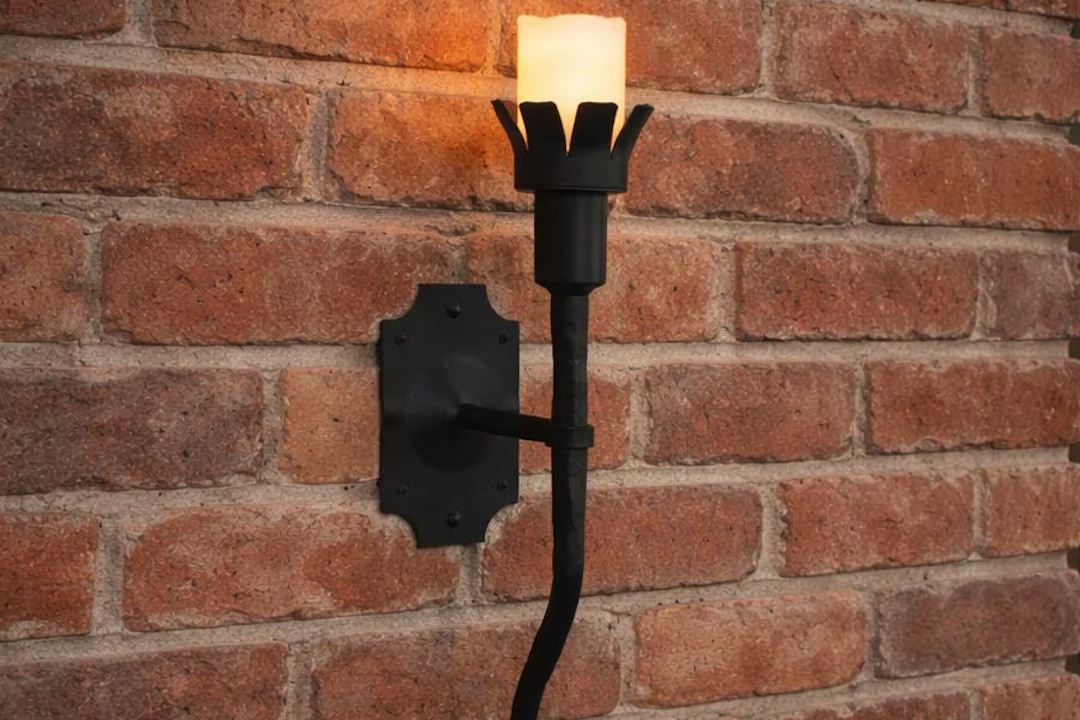
If your Gothic interior features exposed stone or brick, the raw, earthy nature of cast iron will blend seamlessly. The cool, rough surfaces of these materials will echo the textural qualities of the cast iron, creating a sense of timelessness and architectural integrity. The torch sconce becomes a natural extension of the building’s structure, rather than an applied decoration.
Rich Textiles and Velvets
While the Brutalist elements are often about raw materials, Gothic interiors typically incorporate luxurious textiles. Think deep velvets, brocades, or tapestries. The starkness of the cast iron lighting can provide a sophisticated counterpoint to the richness of these fabrics, preventing the space from feeling overly opulent and instead offering a grounding, artistic touch. The light cast onto these textures will create dynamic visual interest.
Color Considerations for Your Walls and Accents
The walls and accent colors in your Gothic interior will play a significant role in how the torch lights are perceived.
Deep, Muted Hues
Walls in shades of charcoal grey, deep forest green, midnight blue, or even a dusky burgundy will enhance the dramatic effect. These colors absorb light, which will make the illuminated areas from your torch sconces stand out more prominently, creating that essential Gothic chiaroscuro.
Avoiding Overly Bright or Trendy Colors
Steer clear of bright whites, pastel shades, or any colors that feel overly contemporary or cheerful. They will clash with the mood you’re trying to create and diminish the impact of your Brutalist cast iron elements. The goal is to create an enveloping atmosphere, and deep, muted colors are key to that.
Metallic Accents (Used Sparingly)
While cast iron is a metal, you might consider other metallic accents in your décor. For instance, aged brass hardware on furniture or subtle bronze detailing in artwork can complement the dark iron without competing with it. The key is to keep these accents muted and aged, aligning with the overall historical and dramatic feel. Too much shiny metal will disrupt the Brutalist and Gothic harmony.
Practicalities of Installation and Maintenance
Even the most dramatic design element needs to be practical. When choosing and installing Brutalist cast iron torch wall lights, there are a few things to keep in mind to ensure they look great and function safely.
The Installation Process: What to Expect
Installing wall lights, especially those with considerable weight like cast iron fixtures, requires careful consideration.
Professional Installation is Recommended
Given the weight and often the need for electrical connections, it’s highly advisable to have these lights installed by a qualified electrician. They can ensure the fixture is securely mounted to the wall (taking into account the type of wall material – drywall, plaster, brick) and that all wiring is done safely and up to code. Attempting to install a heavy fixture yourself without electrical experience can be dangerous and lead to damage.
Power Source and Wiring
Consider where your power sources will be. If you’re installing them in a room that doesn’t already have adequate wiring, this will add to the complexity and cost. Discuss options with your electrician, which might include running new circuits or using surface-mounted conduits for a more industrial, Brutalist aesthetic if that fits. Some fixtures might also be designed for plug-in installation, which can be a simpler DIY option for certain locations.
Fixture Weight and Wall Support
Cast iron is heavy. The wall you’re mounting it to needs to be able to support that weight safely. Your electrician will know how to use appropriate anchors and mounting brackets for different wall types. For very heavy fixtures, they might recommend reinforcing the wall behind the mounting point.
Caring for Your Cast Iron Torch Lights
Maintaining the character of Brutalist cast iron means understanding its material properties.
Cleaning and Dusting
Regular dusting with a soft, dry cloth is usually sufficient for routine cleaning. For more stubborn dust or grime, you can use a slightly damp cloth, but be sure to dry the fixture thoroughly afterwards to prevent any potential rust formation. Avoid harsh chemicals or abrasive cleaners, as these can damage the patina or any protective coatings.
Dealing with Patina and Rust
The natural patina of cast iron is part of its charm. If you prefer a more uniform dark finish, you might consider a light waxing or a specialized metal polish designed for cast iron. However, if a touch of rust does appear (especially in humid environments), it can often be treated with a fine-grade steel wool and then protected with a neutral wax or a suitable metal sealant. Some people actually embrace the subtle signs of aging and patina as adding to the authentic Gothic feel.
Bulb Replacement
Ensure the bulbs you use are appropriate for the fixture and its intended use. Consider accessibility for bulb replacement. Your electrician can advise on the best types of bulbs to use for longevity and the desired atmospheric effect, and perhaps position the fixture for easier access in the future. LED bulbs, known for their long lifespan, are often a good choice for sconces that might be difficult to reach.
Beyond Lighting: The Sculptural Statement
It’s worth reiterating that these Brutalist cast iron torch wall lights are more than just functional items; they are pieces that contribute significantly to the artistic and emotional core of your Gothic interior. They are designed to be seen and felt.
The Imposing Silhouette
The very shape of a torch wall light, whether it’s a stylized flame or a more abstract form, is inherently dramatic. In cast iron, this silhouette becomes particularly potent. It has a substantial presence, a weight that anchors the wall it’s mounted on. This is not a delicate piece of decoration; it’s a statement of presence, a visual anchor that demands attention.
Creating a Narrative
The placement of these lights can help to tell a story within your home. They can guide the eye, highlight important architectural features, or create intimate nooks for contemplation. A series of them along a hallway can feel like a procession, leading you into a deeper, more mysterious part of your dwelling. A single, powerful fixture can serve as a focal point in a larger room, drawing attention to a fireplace or a piece of art.
The Interplay of Light and Shadow as Art
As mentioned before, the shadows cast by these fixtures are a deliberate design element. They are not accidental byproducts of illumination but rather essential components of the visual experience. The dramatic contrast between light and shadow is a hallmark of Gothic art and architecture, and Brutalist torch lights excel at creating this effect. They turn your walls into canvases for a dynamic, ever-changing play of darkness and light.
A Nod to Industrial History and Gothic Romance
There’s an intriguing duality in using Brutalist cast iron torch lights in a Gothic setting. Brutalism often evokes a sense of industrial power and raw utility, while Gothic design is steeped in romance, mystery, and historical echoes. When these two seemingly disparate aesthetics meet in a fixture like this, they create a unique tension and depth. The rugged, honest material of the cast iron speaks to the practical, enduring strength of Gothic structures, while the torch form itself taps into a more romantic, historical imagery. It’s a sophisticated blend that adds layers of meaning to your décor.
Ultimately, a Brutalist cast iron torch wall light for your Gothic interior is an investment in atmosphere and character. It’s a way to imbue your space with a sense of history, drama, and a beautifully unvarnished authenticity. By carefully considering its placement, its interaction with light, and its relationship to your overall design, you can create a truly captivating and evocative environment.